


Scoping the Site: A Builder’s Guide to Land in Victoria & The Cowichan Valley
Choosing the right piece of land is one of the most important decisions in the custom homebuilding process.
The Foundation of a Strong Build: Why the Land Matters
Before any architectural plans are drawn or permits submitted, the land determines the framework within which everything else must operate. Its physical characteristics — slope, soil type, orientation, and access — shape everything from structural requirements to drainage strategies. Beyond the technicalities, the land shapes how the home feels: how morning light enters a bedroom, how privacy is maintained, and how outdoor areas flow naturally from interior spaces.
Functional Design Begins with the Land
Site orientation, slope, and soil composition aren’t just technicalities—they’re foundational to how a home is designed and lived in.
The decision to purchase land should never be made in isolation from the homebuilding vision. Too often, promising many presents hides underlying constraints that can lead to compromise. Thoughtful site selection begins with understanding not only what’s visible, but what lies beneath — and what regulations and restrictions exist around it.
Evaluating Land in Victoria
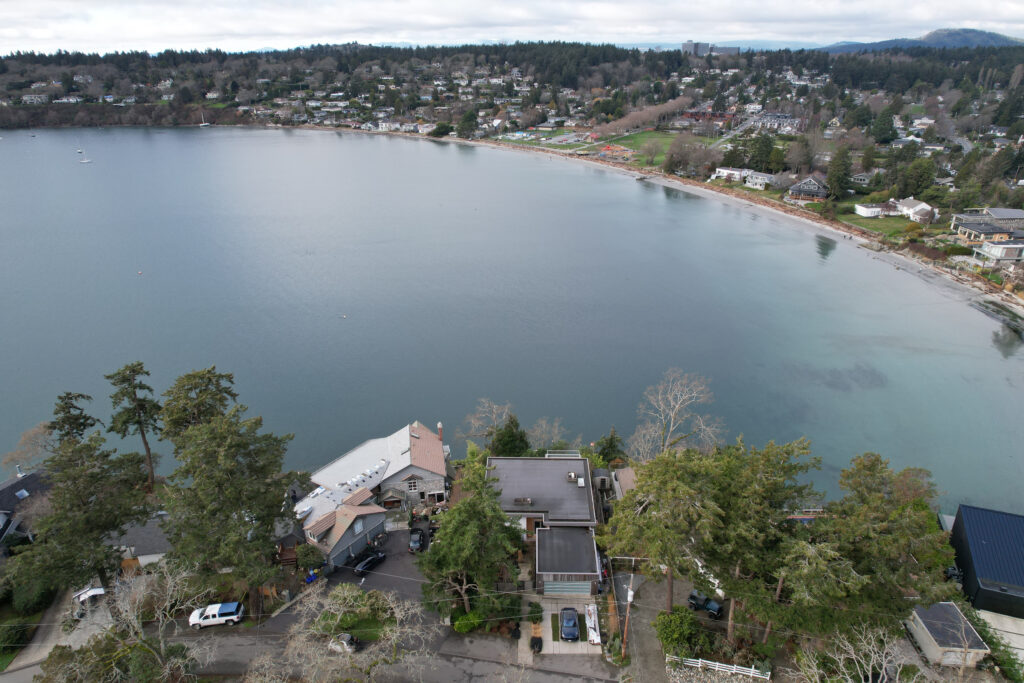
Victoria offers an eclectic mix of lots, ranging from compact parcels in established urban enclaves to sweeping coastal properties. However, its mature development means that available land is often subject to layers of planning regulations. The city has rigorous zoning bylaws, including setback requirements, floor space ratios, and height restrictions. In neighbourhoods such as Rockland and South Oak Bay, heritage overlays further restrict alterations to existing landscapes or buildings.
Infill lots may pose additional challenges, such as tight access for construction equipment or shared infrastructure with neighbouring homes. On the upside, these sites often offer unmatched access to services, walkability, and an established sense of community. When evaluating a property, understanding the lot’s history — particularly any prior development, subdivision, or rezoning attempts—can provide critical insights into feasibility.
Know Before You Buy
Victoria’s heritage designations, zoning codes, and tree bylaws can heavily influence both the design and timeline of your project.
Service connection is another core factor. Older neighbourhoods may have ageing infrastructure that requires updating, while newer subdivisions may offer ready access to high-speed fibre, municipal water, and stormwater systems. Before purchase, it’s advisable to verify utility locations, servicing capacity, and any associated connection fees with the city.
Sun orientation and microclimate can also vary significantly by block. In Victoria, prevailing winds and shade from mature tree canopies can affect both comfort and energy efficiency. Integrating these site dynamics into early planning ensures the eventual design aligns with seasonal rhythms.
Understanding the Terrain in the Cowichan Valley
The Cowichan Valley, by contrast, features larger, more rural parcels that offer greater design freedom and privacy. However, this also introduces more variability. Land may be subject to Agricultural Land Reserve (ALR) rules, riparian setbacks near streams or wetlands, or subdivision limitations.
A common consideration in the valley is the availability and type of services. Many rural properties operate on well water and septic systems, making pre-purchase testing essential. A percolation test will determine the soil’s ability to absorb wastewater, dictating the type and size of the septic field. Well water requires potability analysis, which can affect financing and insurance. Furthermore, the cost of bringing utilities to a remote site can exceed expectations if the distance to the nearest connection point is underestimated.
Access also plays a key role. Some properties may have informal access roads or shared driveways. During wet seasons, these routes can degrade, and steep gradients can impede snow removal and delivery vehicle access. Reviewing legal access rights, slope data, and the potential need for engineered driveways is essential.
While the Cowichan Valley is rich with potential — offering lakefront parcels, forested retreats, and agricultural estates — every opportunity must be evaluated in terms of development practicality and lifestyle alignment.
Rural Land = Greater Freedom, Greater Responsibility
Remote sites in the Cowichan Valley offer design flexibility, but require attention to servicing, terrain, and accessibility
Coastal Exposure & Environmental Considerations
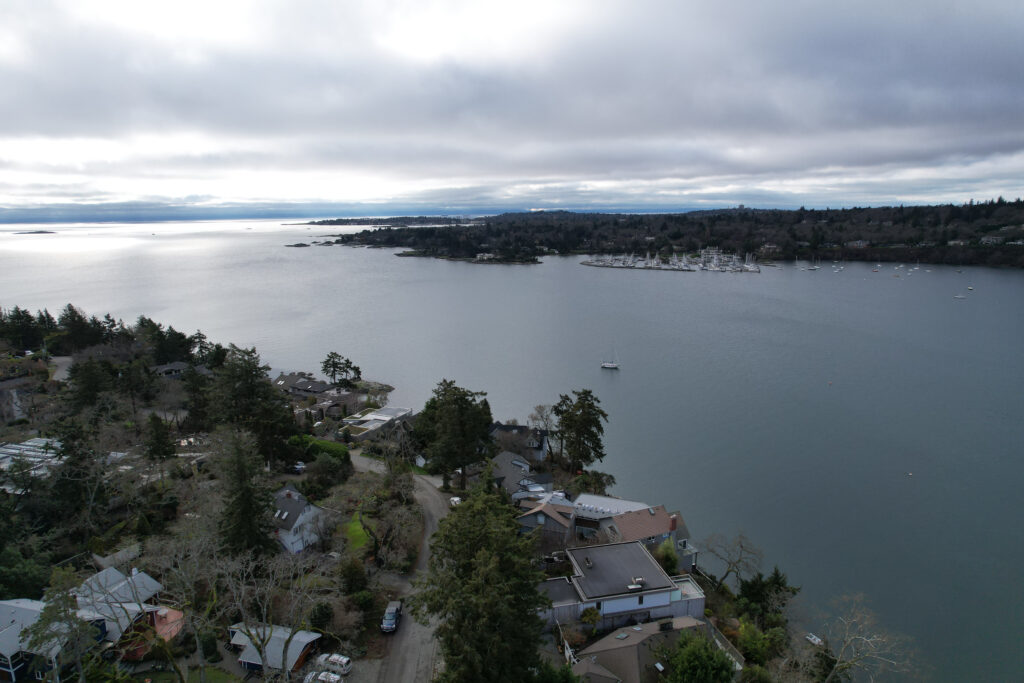
Shoreline properties are among the most sought-after in both Victoria and the Cowichan Valley, but they demand a heightened level of technical planning. The proximity to the oceanfront offers a unique blend of aesthetic appeal and structural responsibility.
Salt air accelerates the deterioration of certain building materials, especially metals and exterior finishes. Homes must be designed with marine-grade components, durable cladding systems, and thoughtful detailing that prevents moisture intrusion. Wind loading from open coastal exposure can also influence structural engineering, particularly for large glazed areas or cantilevered decks.
From an environmental perspective, shoreline development is governed by provincial and municipal regulations that protect ecosystems and prevent erosion. Properties near water may be subject to setbacks from the natural boundary, limits on impermeable surfaces, or mandatory habitat assessments. Floodplain designation or sea level rise projections can also affect both feasibility and insurance premiums.
All of these elements underscore the need for a site-specific design strategy that balances aesthetics with resilience.
Building by the Water
Coastal locations offer premium views but come with strict environmental rules, marine climate considerations, and increased engineering demands.
Geotechnical Assessments & Site Feasibility
One of the most overlooked yet critical elements in early land planning is geotechnical analysis. Even properties that appear flat and dry on the surface may conceal issues beneath.
A geotechnical report, conducted by a qualified engineer, evaluates soil type, compaction, moisture levels, and slope stability. This is especially vital on hillside or waterfront sites where retaining structures or deep foundations may be required. In some areas, high water tables or clay soils can increase the risk of shifting or drainage issues, complicating both structural design and long-term performance.
Seismic classification is another factor, particularly in zones with elevated risk due to bedrock composition or proximity to fault lines. Understanding these risks at the outset prevents costly design revisions later and helps calibrate budgets to reflect real-world construction conditions.
What Does a Geotechnical Report Include?
Soil type, compaction, groundwater levels, seismic classification, and recommendations for safe, stable construction.
Vegetation, Easements & Site Constraints
What enhances a property’s visual appeal may also introduce regulatory complexity. Mature trees, rock outcrops, and undisturbed vegetation are often protected. Municipal tree bylaws can restrict the removal of certain species or specimens above a specific trunk diameter. In some cases, a tree preservation plan may be required as part of the permit application.
Easements and covenants also play a role in shaping what can be done on the land. These legal instruments may grant access rights to neighbouring properties, restrict construction within designated zones, or preserve natural features. Even if the lot appears generous in size, the buildable envelope could be significantly reduced by these constraints.
Zoning setbacks, view corridors, and height limits must all be layered over topography and vegetation data to determine where a home can be placed. Only a detailed site plan prepared by a surveyor can reveal the true parameters for design.
Aligning Site with Vision
Ultimately, the most successful homes are not those forced onto a piece of land, but those that respond to it. A western-facing slope invites expansive glazing to capture sunsets, while a forested setting may call for sheltered courtyards and natural-material palettes. Understanding how site attributes support a particular lifestyle is a key part of the early planning phase.
This alignment is about more than views or seclusion. It extends to how seasonal sun patterns affect daily life, how wind and sound move through the site, and how the surrounding environment influences the experience of each space.
When land and design intention are thoughtfully matched, the resulting home feels inevitable—as though it belongs not only to the owner, but to the place.
The Land Informs the Architecture
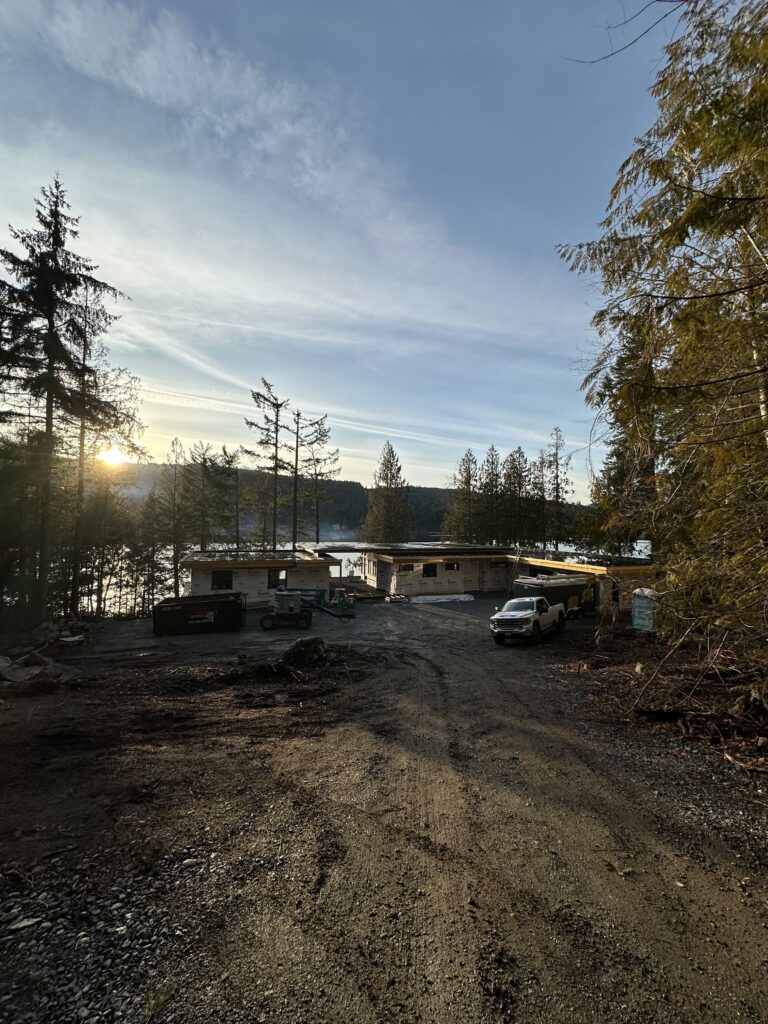
Great custom homes don’t impose—they emerge from their surroundings. The site should shape the home, not be shaped by it.
Closing Thoughts
Selecting land in Victoria or the Cowichan Valley is not simply a financial or logistical decision. It is a foundational step in crafting a home that performs beautifully, endures technically, and resonates emotionally. Each parcel carries its own history, potential, and limitations.
Approaching land selection with diligence, technical guidance, and a clear sense of vision sets the stage for success. From geotechnical feasibility to regulatory fit, from natural light to long-term resilience, the details matter.
A home is not built on land alone. It is shaped by it.
FAQ’s
Why should I start planning renovations in winter?
Winter allows time for thoughtful design, clear budgeting, contractor availability, and material ordering ahead of the busy spring season.
How far in advance should I book a contractor?
For large-scale renovations, booking three to four months ahead is ideal. That means winter is the time to schedule spring projects.
What types of renovations benefit from winter planning?
Whole-home renovations, kitchen overhauls, and layout changes all require lead time for design, materials, and scheduling.
Can I live in my home during major renovations?
It depends on the scope. Planning early helps you decide what living arrangements make the most sense.
What should I prioritize in a whole-home renovation?
This varies, but many homeowners begin with the kitchen, bathrooms, or primary suite before moving on to other areas.